
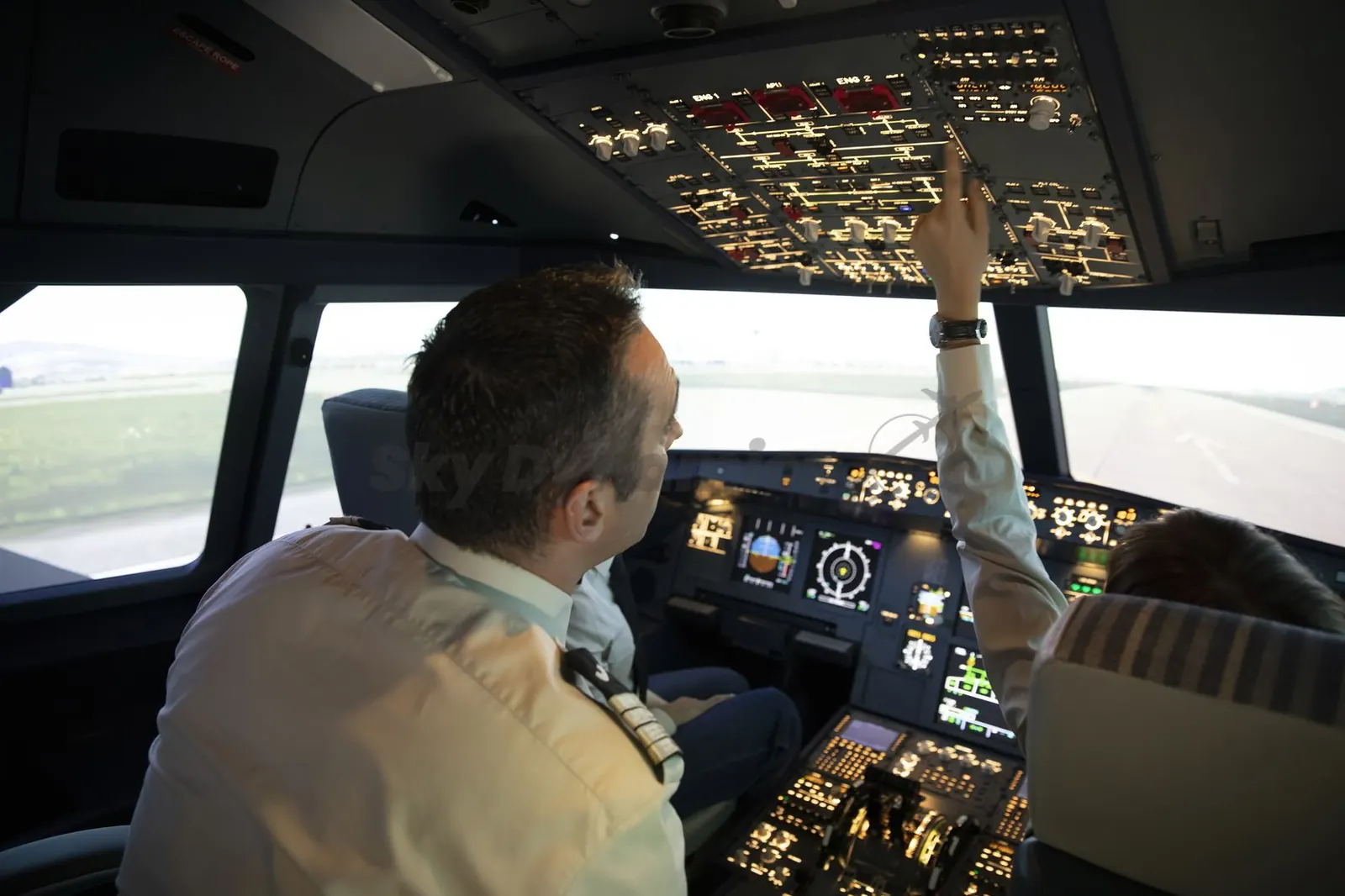
For airlines
Recurrent training that adapts to your own evidence.
We make EBT easy to build, easy to use, and consistent across every fleet you operate.
For operators running EBT or mixed EBT under ORO.FC.231: the ORCA cycle across every fleet and base, instructor concordance measured rather than assumed, and the evidence your authority asks for produced from live data.
Scope
What an airline programme has to hold together
Recurrent and proficiency
The EBT cycle for recurrent training, or a mixed programme where the proficiency check stays in its traditional form.
Type rating and conversion
Competency tracked through type rating, line flying under supervision and release to the line.
Instructor corps
Instructor qualification, standardisation and calibration as part of the same record, not a parallel spreadsheet.
The ORCA cycle at fleet scale
One standard across every base.
Observe, record, classify, assess, debrief, report, calibrate, run identically in Athens and in Anchorage. When a base or a fleet starts to diverge, it shows in the data before it shows in an audit.
- Grading to one framework and scale across fleets
- Concordance per instructor, per base, against the fleet baseline
- Programme adaptation driven by your own competency trends
- Scenario coverage checked against your regulatory references
Scale
What changes when there are twelve bases instead of one
Mixed fleets, one record
A pilot moving from A320 to B737 keeps one competency history rather than starting again.
Devices that can credit the session
With FCS++, the programme sees each simulator's capability, so sessions are scheduled on devices that can credit them.
Training windows that fit rosters
Due dates and recurrent windows aligned with crew rosters.
Delegated administration
Base training managers work in their own scope without a central bottleneck.
Line training phase included
LIFUS and line checks recorded alongside simulator sessions in the same pilot record.
Offline everywhere
Instructors grade offline in the device; the network is never a dependency for a session.
Evidence
What the authority, the safety department and the board each need
Your authority
The programme, the data behind it and what you changed in response: the sequence an inspector actually asks for.
Safety
Competency trends that can be read alongside occurrence and flight-data findings instead of in isolation.
The board
Cost per pilot and per simulator hour, and where training capacity is actually going.
Implementation
First 90 days for an airline
Weeks 1–2 · Map
Programme, grading scale, competency framework and fleet structure mapped in.
Weeks 3–4 · Import
Fleets, bases, instructors, pilots and historical records.
Weeks 5–6 · Instructors
Instructor training and the first measured calibration session per fleet.
Weeks 7–10 · Parallel run
One fleet in parallel with the current process, compared session by session.
Weeks 11–13 · Go live
Fleet-by-fleet go-live and the briefing pack for your authority.
Questions airline training departments ask
Can we start with one fleet?
Yes, and most operators do. A single fleet in parallel for one cycle answers the questions the rest of the programme will raise.
Do we have to move to full EBT?
No. Mixed EBT runs in the same system, and the migration to full EBT is a configuration change rather than a new platform.
How does this connect to our safety data?
Competency trends are exportable and can be read alongside occurrence and flight-data findings; the training system does not try to own safety management.
Who sees what?
Instructors see their sessions, base managers their base, training standards the fleet, and your authority only what you share.
What about our existing TMS or rostering system?
SkyDynamics TMS integrates directly; other TMS and rostering systems connect through the API on the Enterprise plan.
Not your organisation?
The version written for you
Flight schools & ATOs
Ab initio EBT and CBTA from the first lesson to MCC, with FSMS integrated to run the school, the fleet, maintenance and financials.
Learn moreMaintenance training organisations
Part-147 and Part-66 training with practical assessment recorded at the aircraft.
Learn moreFSMS
Ab initio EBT and CBTA, with flight school management integrated.
Learn more
Start with one fleet.
A 30-minute demo covers your current cycle, where it drifts and what a parallel run on one fleet would show.
We respond within one business day.